
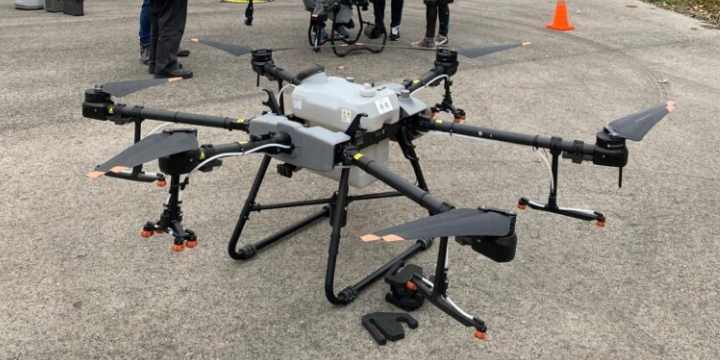
The DRONVINYA: Drones and vineyard health project continues to make progress, delivering promising results in validating the use of drones for applying phytosanitary treatments in viticulture. This initiative, co-funded by the European Union through intervention 7161 of the CAP Strategic Plan (PEPAC) 2023–2027, aims to generate technical evidence to support the future authorization of this technology in Catalonia.
The project is coordinated by INNOVI, with Miguel Torres as project leader, and involves the Vila-rodona Cooperative Winery and Credit Section, Rendé Masdéu, and the Agrotecnio Research Center Foundation.
Drones are becoming a key tool in precision agriculture worldwide, thanks to their advantages in terms of precision, safety, and reduced use of phytosanitary products. However, in Catalonia they are not yet legally authorized for this application, limiting their adoption in the wine sector.
In this context, DRONVINYA is working to generate scientific and technical knowledge to support the development of a regulatory framework adapted to local conditions, especially in vineyards with steep slopes or difficult access.
Throughout the project, trials have been conducted in various wine-growing regions of Catalonia, comparing drone-based applications with conventional ground spraying systems. The activities carried out include:
The results confirm that drones are a technically viable alternative, particularly in sloped or hard-to-access vineyards. Key benefits include:
However, the project has also identified some limitations that require further research:
DRONVINYA has enabled the development of technical protocols and generated key knowledge to facilitate the adoption of drones in the wine sector. The data collected also provides a solid foundation for advancing regulatory adaptation.
Overall, the project contributes to positioning Catalonia among leading regions in advanced agriculture, enhancing the competitiveness of the wine sector while promoting more sustainable, efficient, and safer practices.
Comments